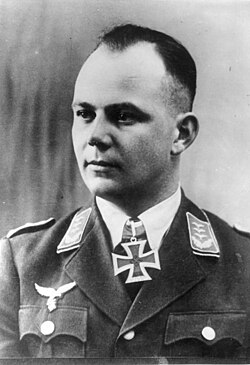
OberstLeutnant Walter Koch, Kommandeur Fällschirmjaeger-Regiment 5.
OberstLeutnant (Lieutenant Colonel) Walter Koch was Officer Commanding Fällschirmjaeger- Regiment 5. Fällschirmjaeger was the name for German Paratroopers and can be literally translated as 'hunter from the sky'. I include the details of this brave, professional German officer, who physically intervened and saved British soldiers of 2 Para from execution by regular German army units in Tunisia in 1942.
| Rank | Oberstleutnant (LIeutenant Colonel) |
| Name & Decorations | Walter Koch |
| Service | Luftwaffe (Fallschirmjäeger) |
| Unit | Commander, 5th Parachute Regiment |
| Attached To | 7 Flieger-Division |
| (s) | Eben Emael 1940, Crete, Russia (Eastern Front), Tunisia |
| Date of Death | 23 October 1943 |
| Place of Death | Berlin |
| Circumstances | Died in hospital from injuries allededly sustained in a road traffic collision. |
| Age | 33 |
| Buried or Commemorated at: | Bonn, Nordfriedhof. Kölnstraße 487, 53117 Bonn |
| Grave or Memorial Number |
Section 16-Grave 7/8. |
Walter Koch was born in Bonn on 10th September 1910. At the time Bonn was part of the Prussian Rhine Province.
He joined the Landespolizei as a Police Officer at the age of 18 on 3 April 1929. He served in the 'Special Purposes' Battalion Polizeiabteilung z.b.V. Wecke, until 1935 when the unit was transferred into the reformed Luftwaffe by it's new commander, Hermann Göring. Göring renamed the unit as the 'Regiment General Göring'.
Koch was promoted Hauptmann (Captain) on 20th April 1938 and was tasked with creating and training a special commando unit called the 'Koch Parachute Assault Battalion' - Fällschirmjaeger-Sturm-Abteilung 'Koch' - for operations in West Europe.
The Battalion saw action in the assault in France and Belgium, capturing the fortress of Eban Emael, bridges over the Maas and Albert Canal (Veldwezelt and Vroenhoeven). Walter Koch and other Officers received the Knight's Cross of the Iron Cross inrecognition of their successes.
Further promotion followed, and by May 1941, Major Koch was now in command of the (re-designated) I Battalion, First Parachute Assault Regiment - I./Luftlande-Sturm-Regiment 1. This Battalion led the attack on Maleme on the western coast of Crete, with the aimn of capturing the strategic airfield. The paras faced stiff opposition from the tough New Zealanders of Brigadier Puttick's 5th Brigade, but they quickly achieved their objectives, Koch being wounded in the head on the first day. Koch was promoted Oberstleutnant on 20 Aoril 1942 and given command of the 5th Parachute Regiment, which was transferred to Tunisia in November 1942.
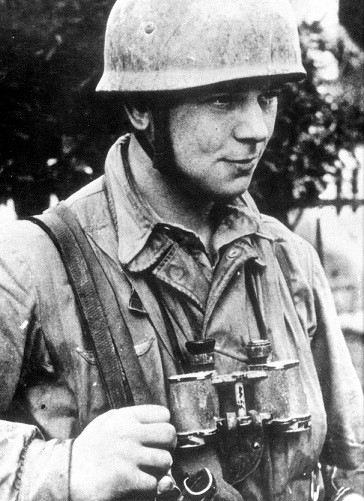
One of the regiment's patrols captured a number of wounded / injured British paratroops from 2nd Bn The Parachute Regiment (2 Para). Koch ensured his medics treated the wounded paras, and provided food, water and cigarettes, before handing them over to German infantry units. On hearing that these units were preparing to execure the Paras under Hitler's Kommandi Befehl (Commando Order); which stated that any Allied troops captured whilst opreating behind enemy lines, whether in uniform or not, were to be executed as spies and saboteurs; Koch immediately returned with one of his Battalion Commanders, Hauptmann Hans Jungwirth, and physically stopped the executions from going ahead. DIfferent accounts state that he kicked the machine gun over, and punched the machine gunner; or that he physically restrained a German Officer during a 'heated argument'. Koch's men took over the detention of the British Paras as regular soldiers governed by the Geneva Convention. The British Paras were given razors so they could improve their appearance, as a mark of mutual respect between paratroopers. The British Paras were then imprisoned as POWs and were saved from execution.
As an outspoken public critic of the Kommando Befehl, Koch was on dangerous ground. He was recalled to Berlin, ostensibly for treatment for his head wound, but he died in hospital in Berlin on 23 October 1943, officially from injuries sustained in a motor vehicle collision; unsurprisingly, speculation was rife that he had been assassinated by the SS or other factions on orders from high within the Nazi apparatus, to silence his oppostion to the Commando Order and by implication, his criticism of Hitler.
Oberstleutnant Walter Koch was buried at the Nordfridhof in Bonn.
Sources:
https://en.wikipedia.org/wiki/Walter_Koch_(paratrooper)
https://ww2gravestone.com/people/koch-walter/
https://www.tracesofwar.com/persons/23975/Koch-Walter-Fallschirmj%C3%A4ger.htm
https://stoessisheroes.com/meet-heroes-german-fallschirmjager-oberstleutnant-walter-koch/

THE FOLLOWING ACCOUNT OF OBERSTLEUTNANT KOCH PREVENTING THE MURDER OF THE SOLDIERS FROM 2 PARA IS REPRODUCED WITH THE KIND PERMISSION OF THE FACEBOOK PAGE:
Bruneval Raid : Operation 'BITING'
which can be found here : https://www.facebook.com/brunevalraid/
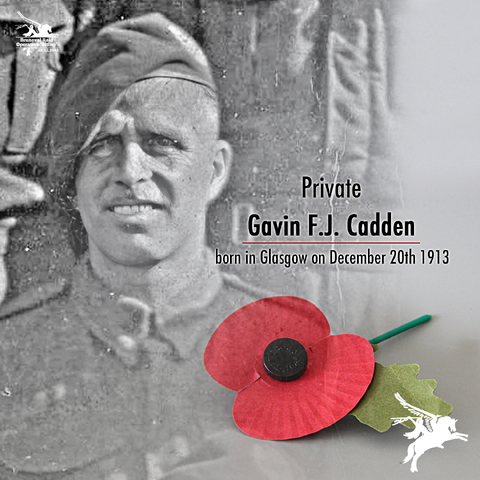
Remembering Private Gavin F.J. Chadden, 2nd Bn The Parachute Regiment.
On 20th December 1913...