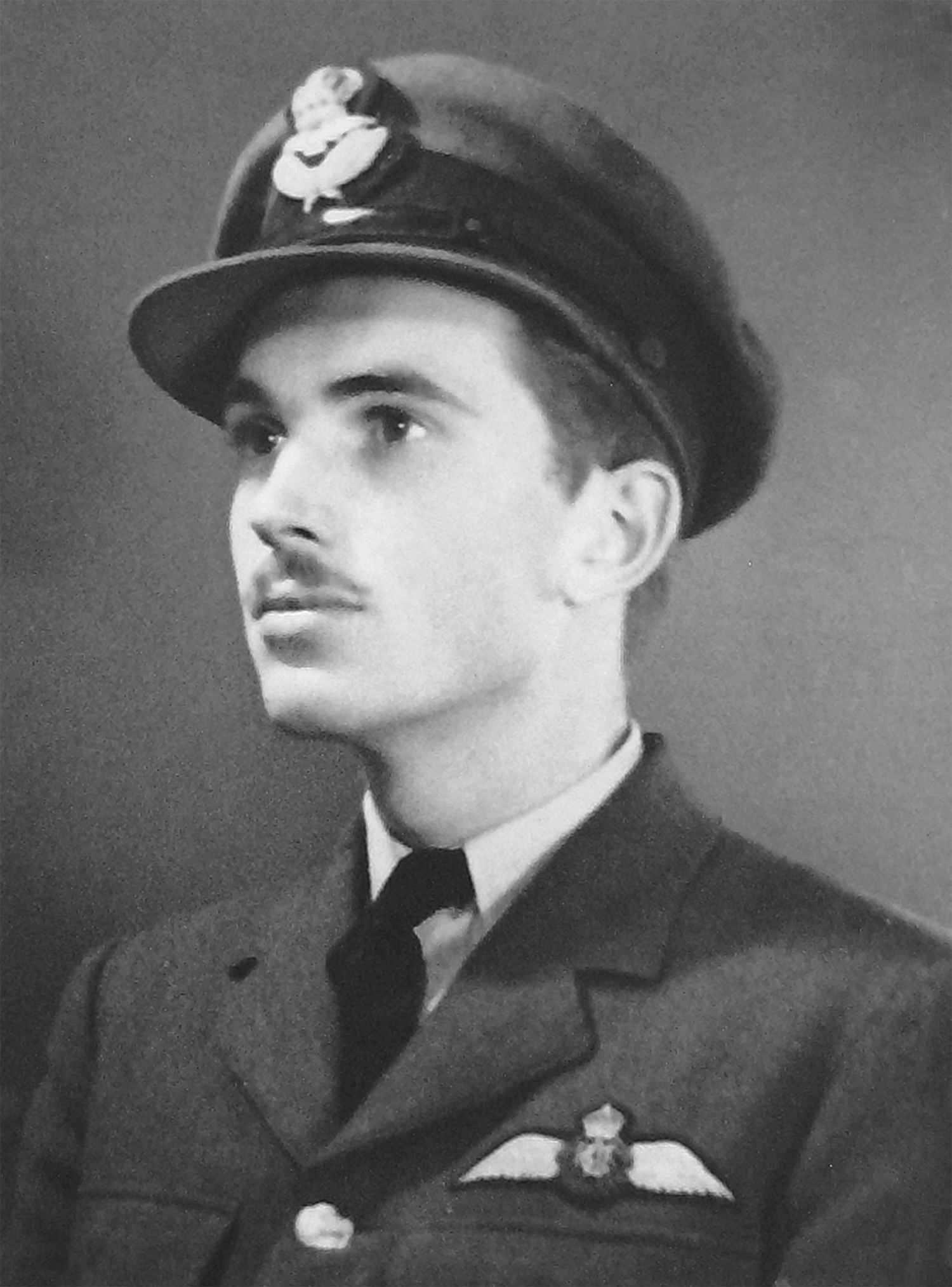
Pilot Officer John Gillespie Magee Jr, RCAF
The following is from an article I wrote for the Heritage Photography journal of the Royal Photographic Society's Archaeology & Heritage special interest group.
John Gillespie Magee Jr. - just how ‘high’ was he when he wrote ‘High Flight’?
John Magee is known the World over for his iconic poem, ‘High Flight’, which eloquently describes the elation and emotion experienced by pilots, and which is regarded variously as an anthem or a prayer by aviators and astronauts alike. The poem is also highly regarded by millions of people from all walks of life as possibly the best poem to come out of World War 2. But Magee was not a ‘one-hit wonder’, he was a poet of some experience and skill, and had a very colourful background. Despite serving with a Canadian Squadron in the RAF, Magee was in fact an American who illegally crossed into Canada from the USA, specifically to enlist in the Royal Canadian Air Force (RCAF) so could join the fight against Nazi Germany in World War 2.
Background and education.
Magee’s parents were Anglican missionaries working in Shanghai, China, when they met. John Magee Sr was from a well-heeled and influential family from Pittsburgh, Pennsylvania. But John Sr chose to enter the clergy, became a priest in the Episcopalian Church, and was sent to Shanghai to spread the gospel there. His future wife was Faith Emmeline Backhouse, a Briton from Helmingham in Suffolk, and a member of the Church Missionary Society, serving in Shanghai. They married in 1921, and John Jr, the eldest of four boys, was born on 9 June 1922. John Jr’s younger brother Hugh followed his father into the clergy, becoming the Reverend F. Hugh Magee.
In 1929, John Jr began his education at the American School in Nanking, but in 1931 his mother Faith brought him to the UK, to continue his studies at a boys’ boarding school; St Clare, near Walmer in Kent. He spent four years there before moving up to Rugby School, which he attended from 1935 to 1939.
A former pupil of Rugby School, who had a great effect on young Magee, was the famous First World War Poet Rupert Brooke, a native of Rugby, having been born at 5 Hillmorton Road on 3rd August 1887. John Jr was deeply moved by both Rugby School’s Roll of Honour, and by Brooke’s poetry.
In 1938, Magee achieved a signal honour at the school, winning the school’s prize for poetry, which Brooke himself had won in 1905. Magee’s award-winning poem made reference to Brooke’s death in 1915. Brooke was commissioned into the Royal Naval Volunteer Reserve, and served with the British Mediterranean Expeditionary Force. Brooke died on St George’s Day 1915, not from enemy action, but like countless millions of casualties throughout the history of warfare, from illness or disease; Brooke died from septicaemia caused by an infected mosquito bite, at 04:46 on 23rd April 1915. As the expeditionary force was under orders to depart immediately, Brooke was buried at 11am that morning, in a site chosen by his close friend William Denis Browne, in an olive grove on the island of Skyros. Browne wrote:
“I sat with Rupert. At 4 o’clock he became weaker, and at 4.46 he died, with the sun shining all round his cabin, and the cool sea-breeze blowing through the door and the shaded windows. No one could have wished for a quieter or a calmer end than in that lovely bay, shielded by the mountains and fragrant with sage and thyme.” [1]
Magee’s poem, Sonnet to Rupert Brooke, referenced the resting place on Skyros:
“We laid him in a cool and shadowed grove
One evening in the dreamy scent of thyme..” [2]
Enlistment and training.
Magee visited his father’s homeland, the United States, in 1939. Whilst there, Germany invaded Poland and the Second World War commenced. Magee was unable to return to Rugby to complete his final year at the school and instead attended Avon Old Farms School in Avon, Connecticut, winning a scholarship to Yale in July 1940. However, Magee’s time at Rugby had obviously motivated him and imbued in him a sense of duty and honour, and instead of taking up his scholarship, Magee entered Canada illegally and enlisted in the Royal Canadian Air Force (RCAF) in October 1940. Hundreds of Americans knowingly broke the law to cross into Canada to enlist, as the USA was still officially neutral; however the US Government tacitly approved of the actions of the volunteers.
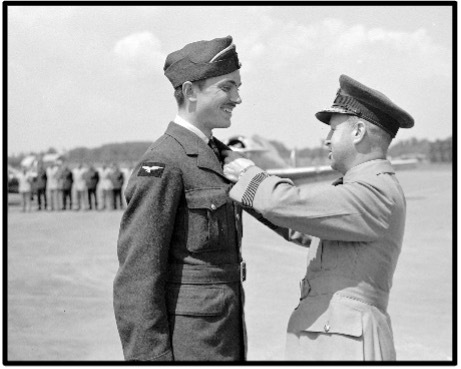
Magee began his initial flight training, first at No 9 Elementary Flying Training School (EFTS) at RCAF Station St. Catherines, Ontario; now known as St. Catherines Niagara District Airport; then at No. 2 Service Flying Training School (SFTS) at RCAF Station Uplands, Ottawa, passing his ‘wings test’. He was presented with his pilot’s wings in a graduation ceremony at No. 2 SFTS in Ottawa on 14 April 1941 by Group Captain Wilfred A. Curtiss. As a qualified pilot, and commissioned as a Pilot Officer in the RCAF, Magee was posted to No. 53 Operational Training Unit (OTU) at RAF Llandow in Wales, where he then qualified as a Spitfire pilot. Magee’s instructor commented that he had ‘patches of brilliance, (with a) tendency to overconfidence’.
Operational service with 412 (Fighter) Sqn RCAF.
Magee was posted to No. 412 (Fighter) Squadron RCAF, at RAF Digby.[3] The squadron flew air defence missions over the UK, and fighter sweeps into occupied Europe.
(Coincidentally the current No 412 (Transport) Sqn RCAF is based in Ottawa, although it comes under the control of 8 Wing, Canadian Forces Base (CFB) Trenton, following the closure of CFB Ottawa in 1994. CFB Ottawa encompassed the former base of RCAF Uplands where Magee trained in 1941.)
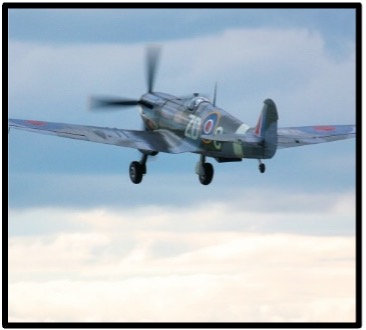
In August 1941 Magee flew a Spitfire Mk V on a high altitude test flight to a height of 33,000 feet, and whilst orbiting in a climb to reach the altitude he recalled the words of a poem by Cuthbert Hicks in 1938, entitled ‘To touch the face of God’; Magee was undoubtedly inspired by a few pieces of poetry. He completed ‘High Flight’ shortly after the high altitude test flight. He wrote a letter to his parents, writing that: "I am enclosing a verse I wrote the other day. It started at 30,000 feet, and was finished soon after I landed. I thought it might interest you". On the back of the letter he penned the lines of ‘High Flight’.
References
[1] Blevins, Pamela (2000). "William Denis Browne (1888–1915)". Musicweb International. Retrieved 9 November 2007.
[2] Sonnet to Rupert Brooke, John Gillespie Magee Junior.
[3] No 412 (Fighter) Sqn RCAF. Formed 30 June 1941, RAF Digby, Lincolnshire, UK.
[4] http://www.raf-lincolnshire.info/wellingore/wellingore.htm
[5] The poem is reproduced in the notes at the end of the article.
Magee was quartered at Wellingore, in a local house which was requisitioned as an Officers’ Mess. Whilst Magee was billeted in a cottage in the driveway, two men who later became very famous were also in residence in the main house.
Guy Gibson, later to find fame as the Officer Commanding No 617 (The Dambusters) Squadron, and Douglas Bader; who lost both his legs in a pre-war flying accident but managed to convince the RAF that he could still be a fighter pilot; both lived there at the time[4]; Bader whilst on R&R leave from the Battle of Britain. The main house still bears the scars of cigarette butts trodden into the wooden flooring at the time.
Death and burial.
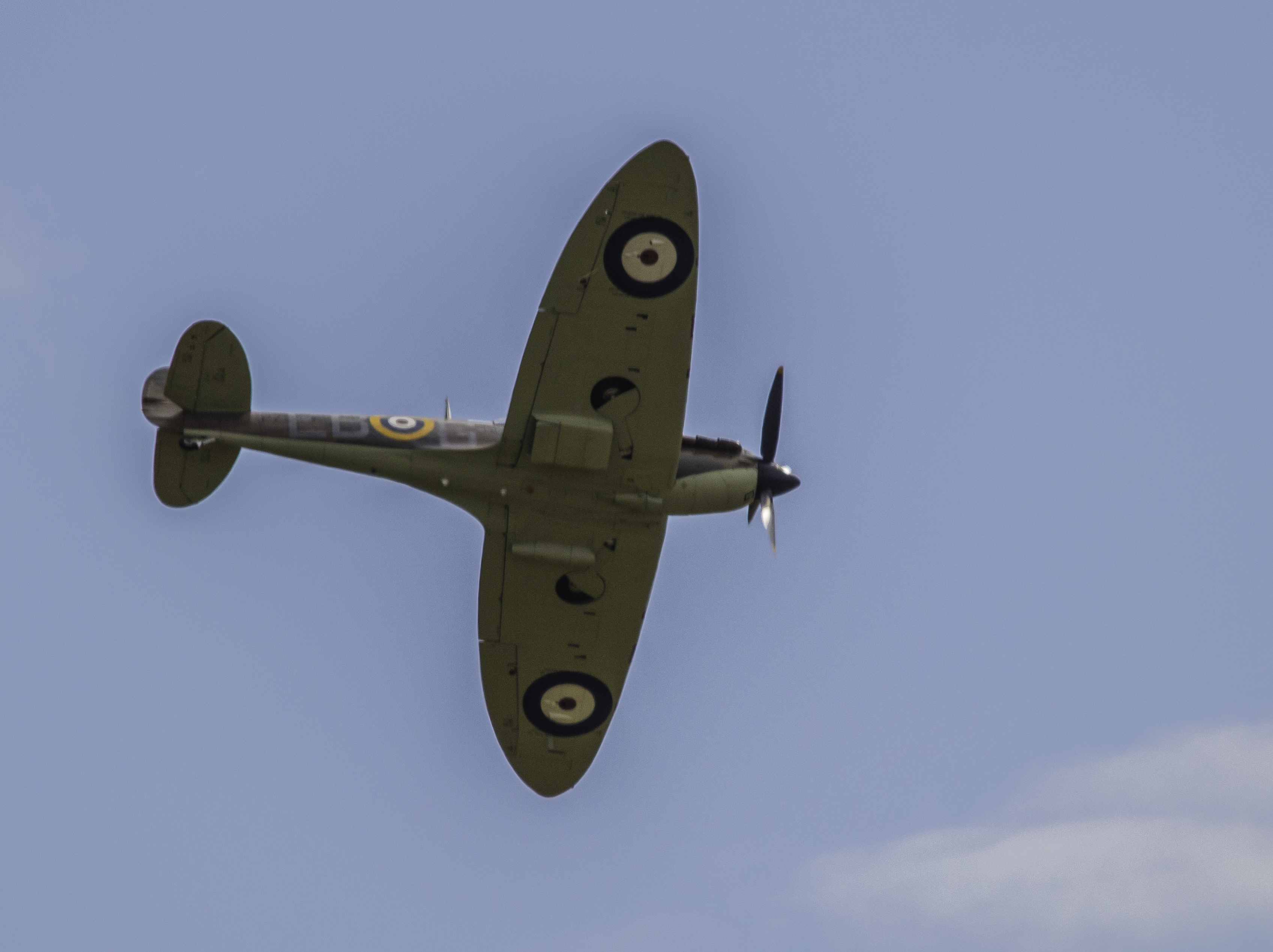
A few months later, on 11 December 1941, just 4 days after America had entered the war due to the Japanese attack on Pearl Harbour, Magee was flying a Spitfire Mk Vb, serial number AD921 and coded VZ-H, as part of a flight of four aircraft out of RAF Wellingore, a satellite station of RAF Digby near to RAF Cranwell. Descending at high speed through cloud, Magee’s aircraft collided in mid-air with an Airspeed Oxford trainer aircraft from Cranwell, which was flown by Leading Aircraftman Ernest Aubrey Griffin. The two aircraft collided over the hamlet (village) of Roxholme at 11:30 hours, and both crashed with the unfortunate loss of both pilots.
A local farmer witnessed the collision and testified at the subsequent enquiry. He testified that he saw the Spitfire pilot (Magee) ‘struggling to open the canopy’ of the Spitfire, but he succeeded and stood on the seat to bale out of the aircraft, but by now the aircraft was too close to the ground for the parachute to deploy fully, and Magee was killed instantly.
The RAF wrote to Magee’s parents, and part of the letter read:
“Your son's funeral took place at Scopwick Cemetery, near Digby Aerodrome, at 2.30pm, on Saturday, 13 December 1941, the service being conducted by Flight Lieutenant S. K. Belton, the Canadian padre of this Station. He was accorded full Service Honours, the coffin being carried by pilots of his own Squadron”.
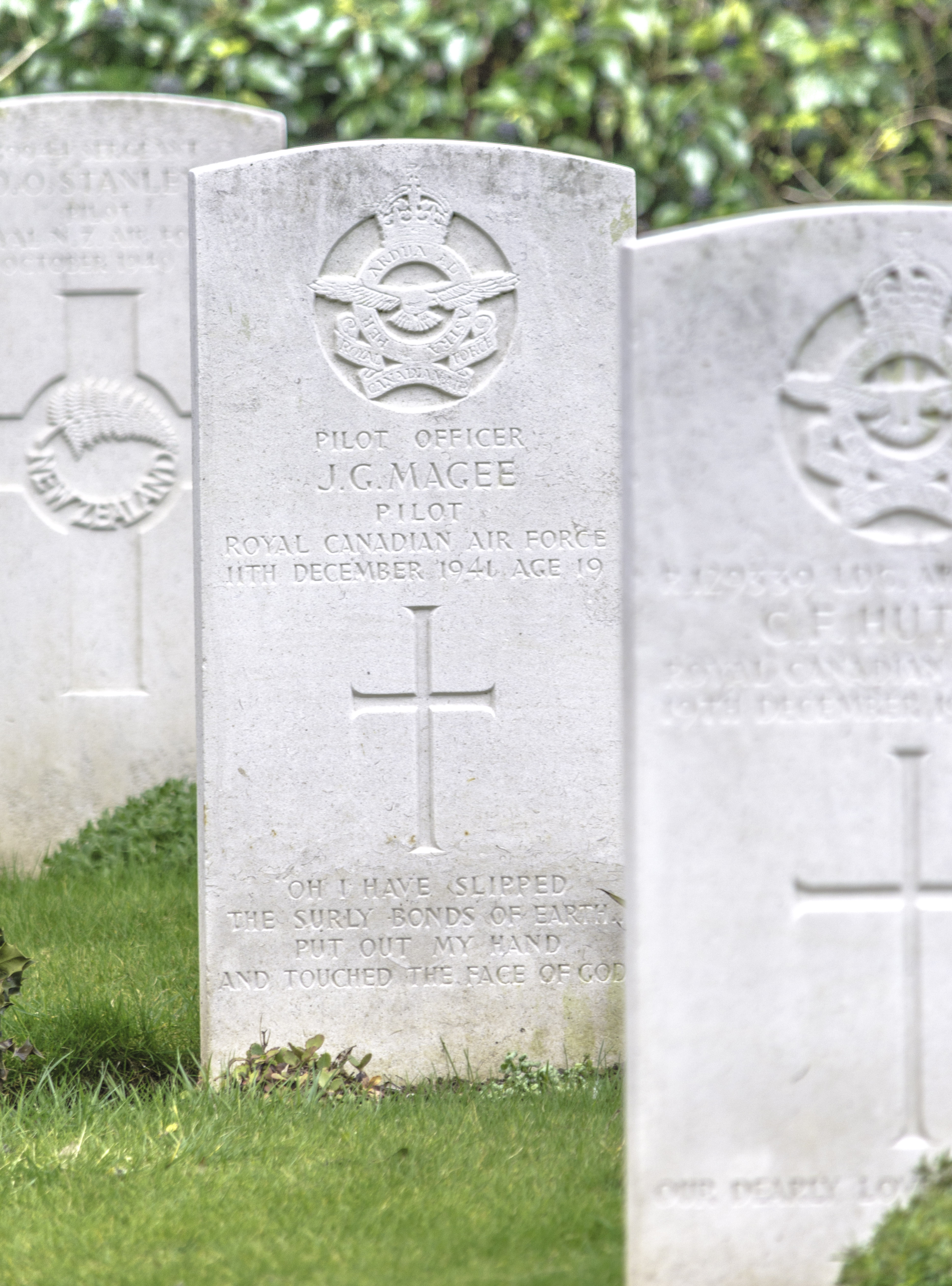
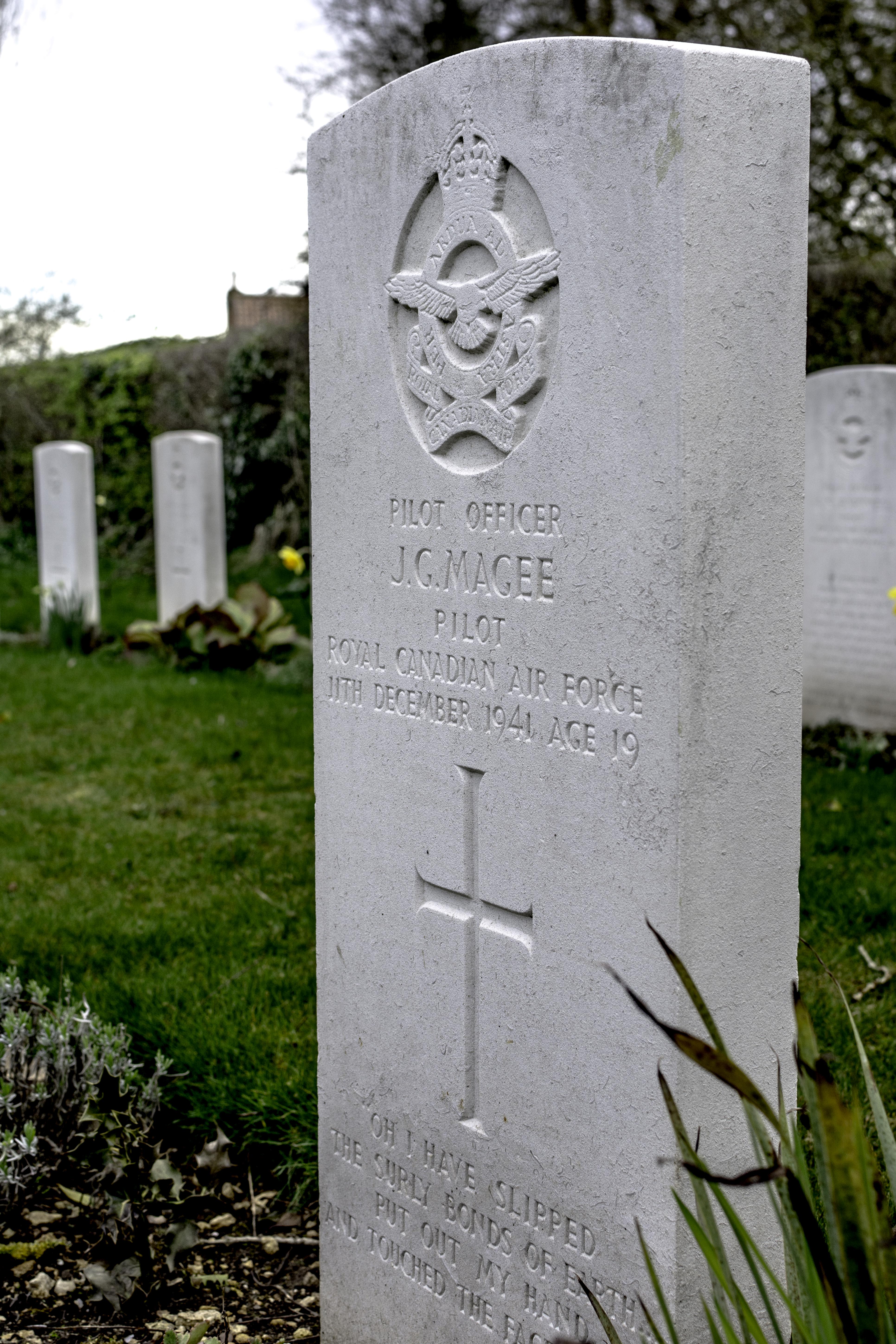
Engraved on Magee’s headstone, an official Commonwealth War Graves Commission pattern headstone, in Holy Cross Cemetery, Scopwick, are the first and last lines of ‘High Flight’:
“Oh! I have slipped the surly bonds of Earth….
Put out my hand, and touched the face of God”. [1]
[1] The poem is reproduced in the notes at the end of the article.
BBC Inside Out Programme – what inspired the content of ‘High Flight?’
The BBC programme investigated the writing of ‘High Flight’ and produced some astounding conclusions.
In the weeks before writing the poem, Magee experienced oxygen failure in a Spitfire, and recorded the event in his aircrew logbook. He described experiencing the symptoms of oxygen starvation; hypoxia; before he was able to descend to a flight level below 10,000 feet where he could safely breathe atmospheric air.
Hypoxia can create some interesting effects including confusion, sensations of elation, sometimes accompanied by spontaneous laughter, or at the opposite end of the scale, feelings of impending doom. Hypoxia can also affect vision and colour perception, potentially causing a hypoxic pilot to ‘see’ a different world to normal. However the effects can be fatal for a pilot who fails to realise that he is hypoxic and who does not re-establish oxygen supply. Magee’s brother the Reverend Hugh was interviewed by Inside Out and commented; "I have not heard this theory before but I really think you're onto something there. Poets have often used drink or drugs to see the world in different ways and this makes sense."
The Inside Out programme conducted some research to establish whether the theory was credible. Dave Slow, a former Red Arrows pilot, who also flew Harriers on operational missions during the Balkans conflict, carried out a simulated flight to 25,000 feet without oxygen at the RAF’s Centre of Aviation Medicine at RAF Henlow, using the Centre’s hypobaric test chamber.
Slow was asked to read ‘High Flight’ in the chamber, but struggled to read it without the oxygen. He then attempted a shape-sorting puzzle devised for two-year old children, and could not complete it. A doctor gave Slow back his oxygen mask, and afterwards Slow explained: "Suddenly it all makes sense. High Flight means a lot to most pilots - I've lost count of how many funerals I have heard it read at. It certainly feels like the way someone in a hypoxic state would see the world. I can't say I was moved to poetry but I can see how it would shape your view of flying. It's an intriguing theory about something that's always been a bit of a mystery."
However, RAF medical experts offer a different view. They believe that the poem may have been inspired by a physiological effect of flight, that was only discovered in the 1950s. Officially called ‘The Breakthrough Phenomenon’ but often known as ‘The Big Hand’, the condition makes pilots have an ‘out of-body’ experience, where often the pilot feels that he is above the cockpit looking down at himself. Other effects can include feelings of doom or an inexplicable sense of elation. The head of the RAF’S Centre of Aviation Medicine at the time, Air Commodore Bill Coker, endorsed the idea that the Breakthrough Phenomenon was “a more likely theory, though you cannot rule out hypoxia”.
Whatever Magee’s, ‘High Flight’ remains an iconic poem to the aviation and space world, and one of the best known poems of the 20th Century, and it will ensure that John Magee Jr’s name will not be forgotten for many, many years to come.
Widespread use of ‘High Flight’.
At the time of their son’s death, John’s parents were living in Washington D.C., and the sonnet was seen by the then Librarian of Congress, Archibald MacLeish, who included it in an exhibition in February 1942. The original is held in the Manuscript Division of the Library of Congress.
High Flight is the official poem of the RAF and RCAF. It has to be learned and recited from memory by officer cadets in their fourth class at the US Air Force Academy.
Michael Collins, an astronaut on the Gemini 10 flight, took a typed copy of the poem with him on the flight and later included it in his autobiographical work ‘Carrying the fire’. The former Flight Director of NASA, Gene Kranz, quoted the first line of the sonnet in his book ‘Failure is not an option’.
President Reagan included the first and last lines of the poem in his address to the nation after the Challenger Space Shuttle disaster which claimed the lives of seven American astronauts; the poem was also quoted after the Columbia Space Shuttle disaster in 2003.
More recently an interpretation of the sonnet was used in a memorial to two RAF Aerobatic Team (‘The Red Arrows’) pilots after the tragic deaths of Flt Lt Jon Egging (20th August 2011 at Bournemouth Air Display) and Flt Lt Sean Cunningham (RAF Scampton on 8th November 2011). A wooden plinth bearing a brass plaque reads:
“… they have slipped the surly bonds of Earth
Put out their hands and touched the face of God...
In memory of
Flt Lt Jon Egging - 20th August 2011
Flt Lt Sean Cunningham - 8th November 2011”.
Extracts from ‘High Flight’ have been used on the headstones of many aviators’ graves, including a significant number in Arlington National Cemetery in the United States, and lines are often quoted at the funeral services of aviators around the World.
'High Flight' by John Gillespie Magee Jr
"Oh! I have slipped the surly bonds of Earth
And danced the skies on laughter-silvered wings;
Sunward I’ve climbed, and joined the tumbling mirth
of sun-split clouds, — and done a hundred things
You have not dreamed of — wheeled and soared and swung
High in the sunlit silence. Hov’ring there,
I’ve chased the shouting wind along, and flung
My eager craft through footless halls of air....
Up, up the long, delirious, burning blue
I’ve topped the wind-swept heights with easy grace.
Where never lark, or even eagle flew —
And, while with silent, lifting mind I've trod
The high untrespassed sanctity of space,
– Put out my hand, and touched the face of God."
Please note; Magee’s descendants have requested that ‘High Flight’ not be translated into any other language but remain in English only.
References
Blevins, Pamela (2000). "William Denis Browne (1888–1915)". Musicweb International. Retrieved 9 November 2007.
Sonnet to Rupert Brooke, John Gillespie Magee Junior.
“We laid him in a cool and shadowed grove
One evening in the dreamy scent of thyme
Where leaves were green, and whispered high above —
A grave as humble as it was sublime;
There, dreaming in the fading deeps of light —
The hands that thrilled to touch a woman's hair;
Brown eyes, that loved the Day, and looked on Night,
A soul that found at last its answered Prayer...
There daylight, as a dust, slips through the trees.
And drifting, gilds the fern around his grave —
Where even now, perhaps, the evening breeze
Steals shyly past the tomb of him who gave
New sight to blinded eyes; who sometimes wept —
A short time dearly loved; and after, — slept."
No 412 (Fighter) Sqn RCAF. Formed 30 June 1941, RAF Digby, Lincolnshire, UK.
Motto ‘Promptus Ad Vindictam’ (Swift to avenge).
Badge: Argent a falcon volant proper.
Battle honours: DEFENCE OF BRITAIN, 1941-1944; ENGLISH CHANNEL AND NORTH SEA, 1942-1943; FORTRESS EUROPE, 1941-1944; Dieppe; FRANCE AND GERMANY, 1944-1945; Normandy, 1944; Arnhem; Rhine.
http://www.raf-lincolnshire.info/wellingore/wellingore.htm