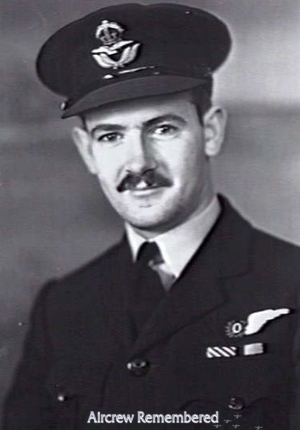
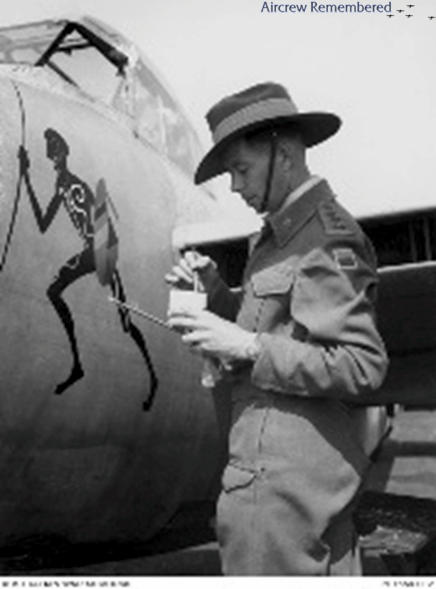
404891 Wing Commander Gordon 'Peter' Panitz DFC RAAF
PAGE UNDER CONSTRUCTION
|
Service No and Rank |
404891 Wing Commander |
|
Name & Decorations |
Gordon ('Peter') Panitz DFC
|
|
Service |
Royal Australian Air Force |
|
Unit |
464 Squadron |
|
Attached To |
2nd Allied Tactical Air Force |
|
Operation |
Low level strike against railway communications around Dijon |
|
Date of Death |
22 August 1944 |
|
Place of Death |
Bona Communal Cemetery, Nièvre, France |
|
Circumstances |
His Mosquito aircraft crashed into a hill returning from a raid, squadron reports indicated that the aircraft had been hit by anti aircraft fire. |
|
Age |
28 |
|
Buried or Commemorated at |
Bona Communal Cemetery, Nièvre, France |
|
Grave or Memorial Number |
1. Introduction and overview
Among the Australian airmen who served with Royal Air Force Fighter Command during the Second World War was Gordon Panitz, known to his family, friends and fellow airmen as Peter.
His wartime career took him from civilian life in Queensland to the skies over Britain and occupied Europe, initially as a night-fighter pilot and subsequently as a specialist in offensive Mosquito operations.
During 1943, his service with No. 456 Squadron RAAF brought him considerable recognition. Together with his navigator, Richard Sutton Williams, he developed a reputation for attacks against enemy railway communications. He subsequently undertook instructional duties before returning to operational flying as commanding officer of No. 464 Squadron RAAF.
It was in this capacity that Panitz became connected with the history of Operation BULBASKET, participating in the raid on Bonneuil-Matours on 14 July 1944.
Barely six weeks later, Panitz and Williams lost their lives whilst operating over France. They remain buried together in the village of Bona.
2. Early life in Australia, 1915–1940
Gordon Panitz was born at Boonah, Queensland, on 21 September 1915. the son of Frederick Samuel Panitz and Janet Panitz (nee Gordon) of Southport, Queensland.
His family operated a bakery in Boonah before moving to Southport on the Queensland coast. As a young man, Peter participated in sporting and musical activities, playing the drums in his school orchestra. He followed his father into the baking trade, working as a master baker for six years.
There was little in his civilian occupation to suggest that, before reaching his twenty-ninth birthday, he would command an Australian Mosquito squadron operating over German-occupied Europe.
On 6 December 1940, aged twenty-five, Panitz enlisted in the Royal Australian Air Force. He was allocated service number 404891.
3. Flying training and arrival in Britain, 1941–1942
Panitz received his flying training under the Empire Air Training Scheme, the Commonwealth programme established to supply trained aircrew for the expanding Allied air forces.
His training included periods at Archerfield and Amberley in Queensland. He progressed from elementary flying training to multi-engine aircraft and was subsequently commissioned as a pilot officer.
The published service chronology provides the following dates:
|
Date |
Event |
|---|---|
|
6 December 1940 |
Enlisted in the RAAF |
|
2 January 1941 |
Promoted to leading aircraftman |
|
6 February 1941 |
No. 2 Elementary Flying Training School, Archerfield |
|
7 April 1941 |
No. 3 Service Flying Training School, Amberley |
|
May 1941 |
Awarded flying badge |
|
29 July 1941 |
Commissioned as pilot officer |
|
August 1941 |
Departed Australia |
|
5 October 1941 |
Arrival in Britain |
|
18 October 1941 |
Posted to No. 54 OTU, RAF Church Fenton |
|
29 January 1942 |
Promoted to flying officer |
|
24 February 1942 |
Posted to No. 456 Squadron RAAF |
His original flying logbook, now preserved by the Australian War Memorial, records his qualifications, aircraft experience and operational flying. It is an important surviving record of his development from trainee pilot to squadron commander.
4. No. 456 Squadron RAAF — Night-fighter operations, 1942
Panitz joined No. 456 Squadron RAAF on 24 February 1942. His introduction to operational flying was through Britain's night-fighter force, whose responsibilities included the interception of German aircraft operating over the British Isles.
Flying the Bristol Beaufighter required considerably different skills from those Panitz had acquired during his initial training in Australia.
Night operations placed particular importance upon navigation, cooperation between crew members and the ability to operate in poor visibility. It was during this period that Panitz acquired the operational experience upon which his later career would be built.
The introduction of the de Havilland Mosquito into the squadron's aircraft establishment during 1943 marked an important turning point. The Mosquito FB Mk VI offered the opportunity to undertake offensive operations at considerable distances from British bases, and Panitz would become closely associated with this aspect of the squadron's work.
Primary sources for this period
-
Panitz's personal flying logbook, AWM2022.6.73.
-
No. 456 Squadron Operations Record Books, AIR 27/1899.
-
No. 456 Squadron — An Operational and Personal Record, AWM2020.18.287.
5. The Ranger Flight and the Offensive Dozen, 1943
The development of offensive operations against German communications in occupied Europe became an increasingly important part of No. 456 Squadron's activities during 1943. Known as Ranger operations, these missions were intended to disrupt enemy activity beyond the immediate area of Britain's air defences.
Panitz became particularly associated with attacks against railway communications. His appointment to lead and develop the specialist Ranger Flight represented an important stage in his progression towards higher command. The six crews associated with this specialist flight became known as the Offensive Dozen.
For the purposes of this biography, the history of the flight should be considered alongside Panitz's personal operational record. The distinction between the achievements of the entire flight and those of Panitz and Williams individually must be maintained.
Richard Sutton Williams
The importance of Panitz's navigator, RAAF navigator 411411 Flight Lieutenant Richard Sutton Williams DFC (29), cannot be overlooked. The two men were born within about a month of each other, Richard was born earlier on 12 August 1915, the son of Ernest William and Evangeline Williams; husband of Joyce Mabel Williams, of Patonga Beach, New South Wales. F/Lt Williams also came from Patonga Beach, New South Wales.
Mosquito pilots relied heavily on their navigators at certain times during the flights; the Mosquito was very fast and powerful and had crews had to react quickly and work together if any emergencies occurred in flight.
Their partnership continued during Panitz's Mosquito career and was eventually renewed with No. 464 Squadron. Through the Australian War Memorial's records, the two men are associated with attacks upon 22 trains and numerous other enemy targets.
Their shared operational experiences, and their eventual deaths together, make Williams an integral part of Panitz's biography.
The railway operations of May 1943
The operation of 6 May 1943 became particularly associated with Panitz's reputation as a railway attacker.
The achievement of attacking six trains during a six-minute period attracted newspaper attention both in Britain and Australia.
It is important, however, that the eventual published biography distinguishes the number of trains attacked from the number independently confirmed as destroyed.
The surviving personal logbook and squadron operational records are the appropriate sources for determining the precise aircraft details and contemporary claims.
The significance of the Ranger Flight
Panitz's Ranger Flight experience is important to understanding his later career with No. 464 Squadron.
It exposed him to offensive operations against German communications and infrastructure, the challenges of operating over occupied France and the responsibility of leading other aircrew.
These experiences provide relevant historical context for his later participation in the Bonneuil-Matours raid associated with Operation BULBASKET.
6. Recognition, promotions and the Distinguished Flying Cross
During 1943, Panitz's operational achievements and leadership received formal recognition.
His promotion to flight lieutenant took effect on 29 July 1943. The published service chronology places his promotion to acting squadron leader on 20 October 1943.
His Distinguished Flying Cross was announced shortly afterwards.
Recipient: Flight Lieutenant Gordon Panitz
Service number: 404891
Unit: No. 456 Squadron RAAF
London Gazette: 29 October 1943, page 4766
Commonwealth Gazette: 4 November 1943, page 2399
The award recognised his operational skill, leadership and commitment to duty.
It is important to distinguish the announcement of the decoration in October 1943 from its formal presentation by the King in July 1944.
Promotion discrepancy
The Australian War Memorial's biographical timeline gives 20 October 1942 for his promotion to acting squadron leader, whereas the Virtual War Memorial gives 20 October 1943. Given the chronology of his other promotions, 1943 appears more plausible, but the original RAAF personnel record is needed to resolve the discrepancy.
7. Instructional duties and marriage, December 1943 – June 1944
After almost two years with No. 456 Squadron, Panitz was transferred to instructional duties. On 20 December 1943, he was posted to No. 63 Operational Training Unit at RAF Honiley, where his operational experience could be passed on to other night-fighter crews.
On 15 February 1944, he transferred to No. 60 Operational Training Unit at RAF High Ercall, undertaking further instructional duties involving Mosquito aircrew.
These appointments are an important part of his career. His responsibilities extended beyond his own operational flying to preparing other men for the dangers and demands of active service.
His commanding officer, Wing Commander R. A. Mitchell, subsequently commented favourably upon both his temperament and abilities as an instructor.
During this period, Peter married Helen Winton, who came from Banffshire, Scotland. Their marriage was to be tragically short. Before the end of August 1944, Helen would receive news that her husband had been lost on operations over France.
8. No. 464 Squadron RAAF — Return to operations
By the summer of 1944, Panitz was returning to operational service at a particularly important stage of the war.
The Allied landings in Normandy on 6 June had created an urgent requirement to disrupt German movements and prevent reinforcements reaching the battlefield.
No. 464 Squadron RAAF, operating Mosquito FB Mark VI fighter-bombers, contributed to this wider campaign against enemy communications and military installations. Panitz's earlier experience made his appointment to command the squadron a significant progression in his career. The Australian War Memorial records his appointment as commanding officer and promotion to acting wing commander on 4 July 1944. The alternative date of 22 June identified in our earlier research remains to be reconciled with the June squadron ORB.
9. Operation BULBASKET
Historical background
Operation BULBASKET commenced in June 1944 as part of the wider Allied effort to impede German reinforcement of the Normandy battlefield.
Personnel of the Special Air Service, working with members of the French Resistance, operated behind enemy lines in western France. German countermeasures subsequently led to the capture and execution of members of the BULBASKET force.
The Allied air attack on Bonneuil-Matours in July 1944 forms an important part of the subsequent history of the operation.
It is here that the story of Wing Commander Panitz intersects with the existing Tell Them Of Us research into Operation BULBASKET.
14 July 1944 — Bonneuil-Matours
On this date, Panitz participated in the combined operation involving Nos. 21, 464 and 487 Squadrons.
The four No. 464 Squadron aircraft and crews identified in existing research were:
|
Aircraft |
Pilot |
Navigator |
|---|---|---|
|
HR187 |
S/Ldr R. W. Hyem |
F/O E. J. Brayne |
|
HX919 |
F/O J. R. C. Walton |
F/O C. H. Harper |
|
NS994 |
W/Cdr G. Panitz |
F/Lt R. S. Williams |
|
NS926 |
F/Lt W. D. Parsons |
F/O E. Ramsay |
The operation was directed against German-occupied premises at Bonneuil-Matours. Squadron reports recorded extensive fire and damage to the target buildings.
Records that W/Cdr Panitz and S/L Hyem engaged railway targets during their return flight. All the aircraft returned safely.
The importance of this operation to Panitz's biography
Several aspects make 14 July 1944 a particularly significant date.
It was the date associated with the formal presentation of his Distinguished Flying Cross. It also saw him return to offensive operations alongside his former navigator, Richard Sutton Williams.
The raid connects his career directly with the history of the SAS personnel whose story is already documented on Tell Them Of Us.
It also demonstrates the continuity of his involvement in operations against German communications from his time with No. 456 Squadron through to his command of No. 464 Squadron.
Nevertheless, the extent of Panitz's personal knowledge of the execution of the BULBASKET men and his involvement in authorising or planning the raid remain unestablished. although anecdotal accounts indicate that the AOC 2nd Allied Tactical Air Force told the crews, "if shot down, do not mention retaliation (for the murders of the SAS soldiers, American airman and French Resistance fighters) as you can't outpiss a skunk".
Participation should not be confused with responsibility for the entire operation.
Related article: Tell Them Of Us — Operation BULBASKET, 6 June–24 July 1944.
10. The final operation — 22 August 1944
By August 1944, the Allied advance in France was gathering momentum. Panitz continued to undertake operational duties with No. 464 Squadron despite the responsibilities of his appointment as commanding officer.
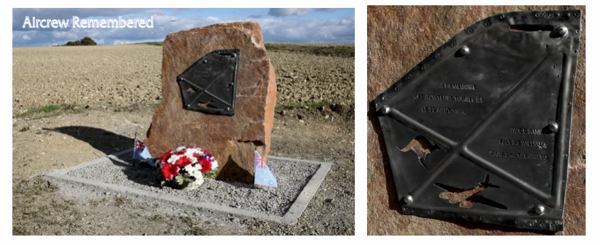
On 22 August 1944, he and Williams departed on an operation against railway communications in France. The target was the railway marshalling yards at Chagny near Dijon, France. They flew their usual airccraft, DH.98 Mosquito FB Mk.V1 Series II Serial NT229.
Their Mosquito collided with a hillside. Neither man survived. Panitz was twenty-eight years old.
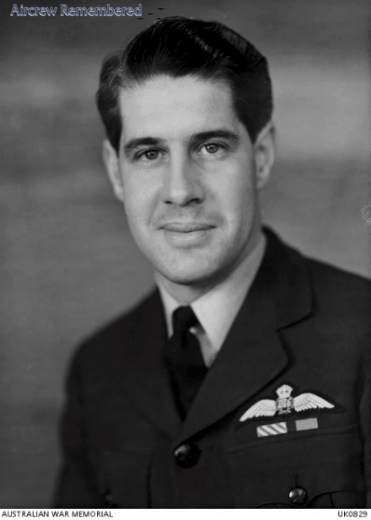
The loss brought to an end the partnership between two Australian airmen whose operational careers had become closely intertwined. Both men were buried in Bona Communal Cemetery, in the Nièvre department of France.
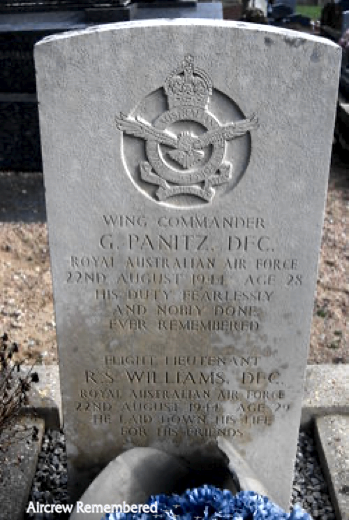
Post war investigations revealed the aircraft was hit by flak when attacking at a very low altitude and crashed into a hill at Bona, near Nièvre, 220km SSE of Paris. The navigator managed to bale out but he was too low for the parachute to open and his body was found in a field near the crash site. The pilot’s body was found in the cockpit wreckage. Both airmen were buried the next day by locals at the small Catholic Churchyard.
11. Graves and remembrance
Wing Commander Gordon Panitz is commemorated on Panel 109 of the Roll of Honour at the Australian War Memorial, Canberra.
He is also commemorated on the Beaudesert and Southport war memorials in Queensland.
On 3 February 2014, the Australian War Memorial dedicated its Last Post Ceremony to his memory.
Wing Commander Gordon Panitz DFC
404891, Royal Australian Air Force
No. 464 Squadron
Died 22 August 1944
Aged 28
Bona Communal Cemetery, France
The story of Peter Panitz should ultimately be remembered not simply through the number of operations he flew, the targets he attacked or the decoration he received, but also through the responsibilities he accepted, the men with whom he served and the family he left behind.
Appendix A — Consolidated career chronology
This table brings together the established career milestones and the remaining research discrepancies.
|
Date |
Event |
|---|---|
|
21 September 1915 |
Born at Boonah, Queensland |
|
6 December 1940 |
Enlisted in the RAAF |
|
2 January 1941 |
Leading aircraftman |
|
6 February 1941 |
No. 2 EFTS, Archerfield |
|
7 April 1941 |
No. 3 SFTS, Amberley |
|
May 1941 |
Awarded flying badge |
|
29 July 1941 |
Pilot officer |
|
August 1941 |
Departed Australia |
|
5 October 1941 |
Arrived in Britain |
|
18 October 1941 |
No. 54 OTU, Church Fenton |
|
29 January 1942 |
Flying officer |
|
24 February 1942 |
Posted to No. 456 Squadron |
|
1942 |
Beaufighter operations |
|
Early 1943 |
Mosquito conversion and Ranger operations |
|
6 May 1943 |
Celebrated railway operation |
|
Mid-1943 |
Leadership of specialist Ranger Flight |
|
29 July 1943 |
Flight lieutenant |
|
20 October 1943 |
Acting squadron leader — date requires confirmation |
|
29 October 1943 |
DFC announced in London Gazette |
|
4 November 1943 |
DFC announced in Commonwealth Gazette |
|
20 December 1943 |
Posted to No. 63 OTU |
|
15 February 1944 |
Posted to No. 60 OTU |
|
Early 1944 |
Married Helen Winton |
|
22 June 1944 |
Possible commencement of command of No. 464 Squadron |
|
4 July 1944 |
Recorded appointment as commanding officer; acting wing commander |
|
14 July 1944 |
DFC investiture |
|
14 July 1944 |
Bonneuil-Matours operation, Mosquito NS994 |
|
22 August 1944 |
Killed on operations with Williams |
|
3 February 2014 |
AWM Last Post Ceremony commemorates Panitz |
Appendix B — Primary-source register
|
Reference |
Description |
|---|---|
|
PR91/016 |
Panitz personal papers and flying logbook |
|
AWM2022.6.73 |
Digitised personal flying logbook, 1941–1944 |
|
AWM2020.18.287 |
No. 456 Squadron operational and personal history |
|
AIR 27/1899/32–56 |
No. 456 Squadron ORBs, 1942–1943 |
|
AIR 27/1924/35 |
No. 464 Squadron, June 1944, Form 540 |
|
AIR 27/1924/36 |
No. 464 Squadron, June 1944, Form 541 |
|
AIR 27/1924/37 |
No. 464 Squadron, July 1944, Form 540 |
|
AIR 27/1924/38 |
No. 464 Squadron, July 1944, Form 541 |
|
AIR 27/1924/39 |
No. 464 Squadron, August 1944, Form 540 |
|
AIR 27/1924/40 |
August Form 541 — reference to verify and obtain |
|
R1525228 |
AWM Honours and Awards record |
|
R1718603 |
AWM Roll of Honour record |
|
PAFU2014/034.01 |
AWM Last Post commemorative account |
Online research sources
Research status and outstanding work
This is the first consolidated biographical manuscript, rather than the finished publication-ready account.
The principal outstanding research is the complete sortie-by-sortie register, covering:
-
All Beaufighter operations during 1942.
-
All Mosquito operations during 1943.
-
The formation, personnel and operations of the Offensive Dozen.
-
The original DFC recommendation and citation.
-
His instructional flying during 1943–1944.
-
His personal operations with No. 464 Squadron.
-
The reconciliation of his final flight against the August Form 541.
-
Original photographs, contemporary newspaper coverage, family correspondence and archival page references.
These sections will substantially expand the manuscript. In particular, the Ranger Flight and Operation BULBASKET chapters deserve considerably more detail before the biography is ready for final publication on Tell Them of Us.
Gallery
Feel free to browse through my gallery images below.